
Marine Boyer. Gymnastics, Body and Mind.
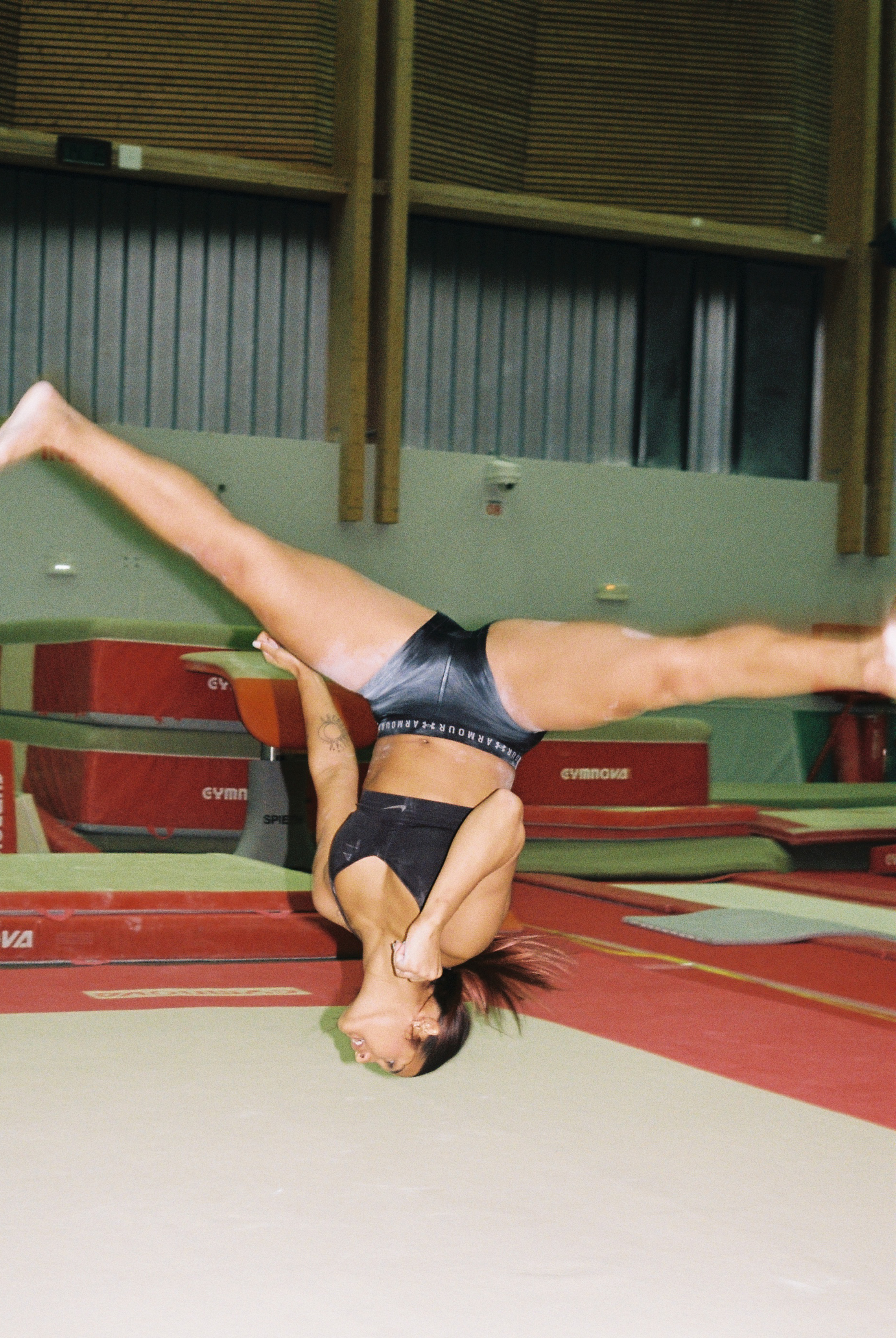
Marine Boyer launches her one-metre-sixty frame across the vast gymnastics hall at INSEP, on the edge of the Bois de Vincennes. She springs into the air, linking somersaults under the watchful eye of a little girl from the junior development squad.
Far removed from the stereotypical slender physiques that once defined the sport, Marine belongs to a new generation of athletes who embrace who they are. In a discipline where shaping girls’ bodies was long considered an art, expectations and attitudes have shifted in recent years.
At 21, the captain of the French national team is back in action, after spending several months away from the mats following an Olympic Games that left her questioning herself.
Like many little girls, Marine first discovered a love of gymnastics at school. An activity centre, trampolines and a colourful playground. No wonder entire busloads of schoolgirls turn up at competitions. Talent scouting starts as early as the age of seven.
Her apparatus of choice: the balance beam. She excels at clubs in Meaux and Melun, before injuring her shoulder on the eve of joining INSEP, France’s National Institute of Sport, Expertise and Performance. At just 14, she finds herself sidelined for a year. But the young girl perseveres, coming into her own at the European Championships as those who had suggested trampolining as a fallback look on. Marine finally makes her home at the heart of French Olympic sport.
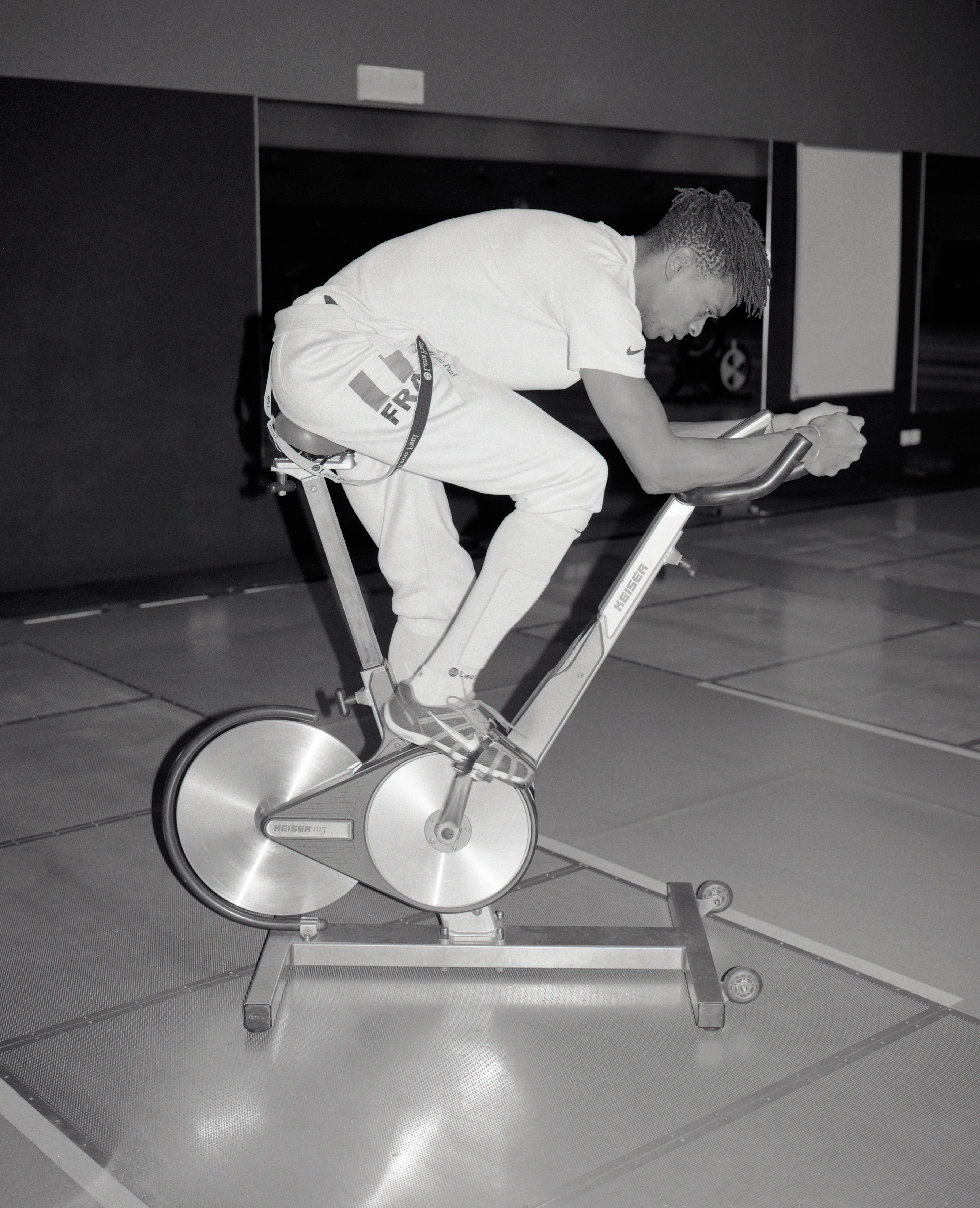
Under Hong and Jian Fu, a Chinese coaching duo, she works through fifty repetitions in a single day. She hones her precision to avoid an injury that could end her hopes of competing at the highest level. All the more so because Marine has changed. Her body has matured.
There is a before and an after puberty. The carefree days of childhood give way to learning how to manage and accept her physique.
In a discipline where the end of adolescence often spells the end of a career, the relationship between body and performance makes gymnastics a demanding sport.
Over time, expectations have evolved. The slight, straight-lined physiques have given way to fuller shapes. The girls adapt their bodies to the demands of performance. The old ideal has been replaced by muscles worn with pride. It took Marine time to come to terms with this. At first, every extra kilo made her doubt herself. Her flexibility, her explosiveness, her muscle tone: everything was affected. In the run-up to the Games, she put herself on restrictive diets. Sometimes she trained for six hours straight with nothing but an apple in her stomach. Then, rather than risk injury, Marine built the strength to support her own body.
Now she also has to accept other people’s gaze. In a leotard, every contour is visible. Fat, muscles, buttocks, breasts: nothing is hidden.
At her first Olympics in Rio, she came into her own. Thrust into the midst of the world’s sporting elite, her innocence swept away any sense of danger or doubt. She went in with a carefree mind and finished fourth, just outside the medals. Right behind Simone Biles. The same American gymnast who would go on to shift the boundaries of the sport by speaking openly about what had long been kept hidden. As if signalling what was to come, those Games marked a transition for Marine: from promising talent to potential medallist. Talent alone would no longer be enough in competition. The mind, which drives the body, has to stay focused in a sport where being judged is part of the job. Brain and body must work in harmony in mid-air. Imperfections must be brought under control. Emotions suppressed.
Marine is discovering this pressure, but she will have to learn to handle it: she has been named captain of the French national team. Melanie, Aline, Carolann, Coline and Celia. Her teammates. Her “second family”, as she calls them. Gymnasts she can count on. She also feels supported by her coaches and the organisation around her. They all need one another to improve. Marine speaks up, giving voice to what the group is feeling. Just as gymnast Youna Dufournet did when she took Marine under her wing at the start of her career. Like a passing of the baton, she embraces her role. Thinking of others before herself.
July 2021. Tokyo. Marine is among the gymnasts selected to represent France on the Olympic stage. Her second Games. After a strong performance in qualifying, the gymnasts reach the team final. Four apparatus on which to shine. The all-around competition. Every routine counts. A single mistake costs the whole team. After the uneven bars, Marine steps up to the balance beam. Her first three elements go well, but charged with excess energy, she can no longer keep her focus. Frustrated by her own nerves. Her mind is no longer on gymnastics. All she wants is for it to be over. Her landing is poorly controlled, costing precious points.
Determined to make up for it, Marine steps onto the floor. Her goal is to claw back every possible tenth of a point and redeem herself. In her sparkling white leotard, she feels the pressure rising. A glance towards her teammates. She fixes her gaze on the far corner. Queen’s “Don’t Stop Me Now” rings out through a hall emptied of spectators. Covid restrictions. She chose the song herself with her physiotherapist because it was ranked as the song that makes people happiest. Marine takes a deep breath before launching into her routine. One skill follows another. A somersault with two and a half twists. A double back tuck. A double back pike. She brings out her full repertoire.
But it will not be enough. For the second time, a medal slips away. In that moment, she just wants to walk away from it all. Cut. Now she has to put it behind her.
After a long break, Marine attends Étoiles du Sport, a programme that brings together talent from across French sport. She recognises her own experience in the words of Muriel Hurtis, a former star of French sprinting. For Hurtis, athletes should be able to discuss their mental health as easily as they talk about their physical injuries. Marine returns with a sense of calm. She accepts that she needs support. Perhaps her greatest victory, after all, is accepting that she isn’t perfect.
Pictures & words - Julien Soulier
Creative direction - David Bellion & Julien Soulier